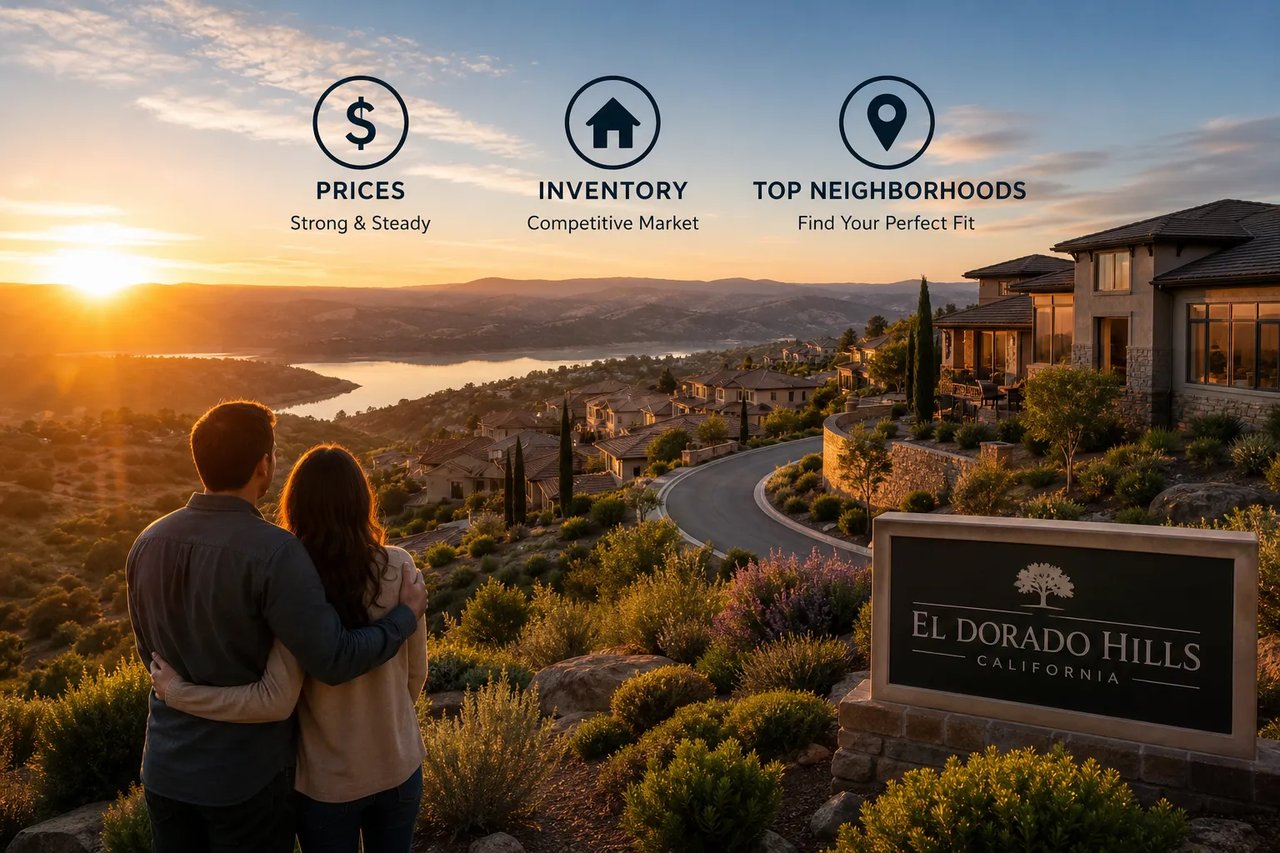
Why do Bay Area buyers need to tour El Dorado Hills neighborhoods before buying?
Bay Area buyers relocating to El Dorado Hills need to tour neighborhoods in person because the market offers a wide range of product types, commute tradeoffs, and lifestyle experiences that price statistics simply cannot capture. A hilltop home in Serrano and a newer tract home closer to US-50 may be priced similarly on paper but feel completely different to live in, and only a boots-on-the-ground visit reveals which one actually fits your life.
I tell every Bay Area client the same thing before we start scheduling showings: relocating to El Dorado Hills is not a decision you make from a spreadsheet. You need to drive the streets, sit in traffic on a Tuesday morning, and walk a neighborhood at dusk. That's when the real picture comes into focus.
What the 2026 El Dorado Hills market actually looks like for Bay Area buyers
The headline numbers tell a useful story, but they also hide a lot of nuance. According to Resideline's August 2026 El Dorado Hills market overview, the median sold price over the six months ending around August 2026 is approximately $900,000, based on 465 closed sales, with a median sold price per square foot near $363.
Zoom in a little closer and the picture gets more interesting. A July 2026 report from CA Housing Market News using Redfin data shows the median sale price fell about 10.3% year over year to roughly $852,000 for the three months ending June 2026, while sales volume jumped about 15.2% over the same period (242 transactions vs. 210 a year earlier). More buyers, at slightly lower prices.
Here's what that actually means for a Bay Area relocator: your equity goes further in 2026 than it did at the 2022 peak. But "further" looks very different depending on which neighborhood you're in. That's the part the data can't show you.
The mix-shift story: smaller homes, stronger price per square foot
One detail that surprises a lot of my Bay Area clients: even as the median price has softened, price per square foot has actually ticked up. A separate August 2026 analysis found that for the three months ending July 2026, the median home price fell more than 11% year over year while price per square foot rose about 3%. The reason: buyers have been gravitating toward smaller, less expensive homes, not a uniform collapse in underlying property values.
In that same July 2026 three-month window, 246 homes sold, up roughly 14.9% from 214 a year earlier. According to a May 2026 report, buyers, including relocation buyers, increased their activity as prices stepped down from peak levels, with 194 sales in the three months ending April 2026, up about 14.1% year over year.
What this means practically: there are two very different markets operating at the same time. Larger, established homes on bigger lots in communities like Serrano or Blackstone. Newer, smaller-footprint homes in communities like Folsom Ranch. Touring helps you figure out which product type actually fits your budget and your lifestyle, and which neighborhoods have the most room to negotiate versus the ones where you'll need to move decisively.
For a broader at-a-glance view of how market data varies even within this area, here's the most recent Zillow trailing-90-day snapshot for two of the neighborhoods I cover:
Area | Median Sale Price | Median Days on Market |
|---|---|---|
St. Andrews | $189,000 | 59 |
Empire Ranch | $872,500 | 54 |
These are area-level medians, an individual home's value varies by condition, street, and timing. But the range itself makes the point: this is not a one-size-fits-all market, and no amount of online research replaces walking both of those neighborhoods on the same afternoon.
What you actually learn on a neighborhood tour that you can't learn online
Commute reality vs. commute estimate
El Dorado Hills and Folsom both sit along the US-50 corridor east of Sacramento. But "along US-50" covers a wide range of real-world commute experiences. A home in a hilltop subdivision farther from the freeway adds minutes to every single trip, not just the commute to the Bay, but the grocery run, the school drop-off, and the evening errand. A home with quick on-ramp access is more convenient for a hybrid commuter but may come with more road noise.
I always recommend that Bay Area buyers planning hybrid schedules, say, two or three days per week in San Francisco, Oakland, or Silicon Valley, actually drive their specific route during a real commute window. Use a mapping app with live traffic from the front door of the house you're considering to your actual office address, at the time you'd actually leave. That number will tell you more than any blog post can.
El Dorado Hills generally sits farther east than Folsom, which can translate to a longer drive toward Bay Area job centers, but it also tends to offer quieter, more semi-rural settings in neighborhoods like Serrano Country Club or the hillside communities above Green Valley Road. Folsom, by contrast, has a more established retail core and a historic downtown that Bay Area buyers accustomed to walkable neighborhoods often appreciate immediately. You won't know which tradeoff matters more to you until you've spent time in both.
According to Zillow's early 2026 El Dorado Hills data, homes were typically going to pending in around 46 days as of January 2026. With days on market in that range, you generally have time to schedule a focused two- or three-day tour without losing every home you like, but you do need to come prepared with a pre-approval in hand and a local agent monitoring new listings in real time.
Topography, noise, and the things photos never show
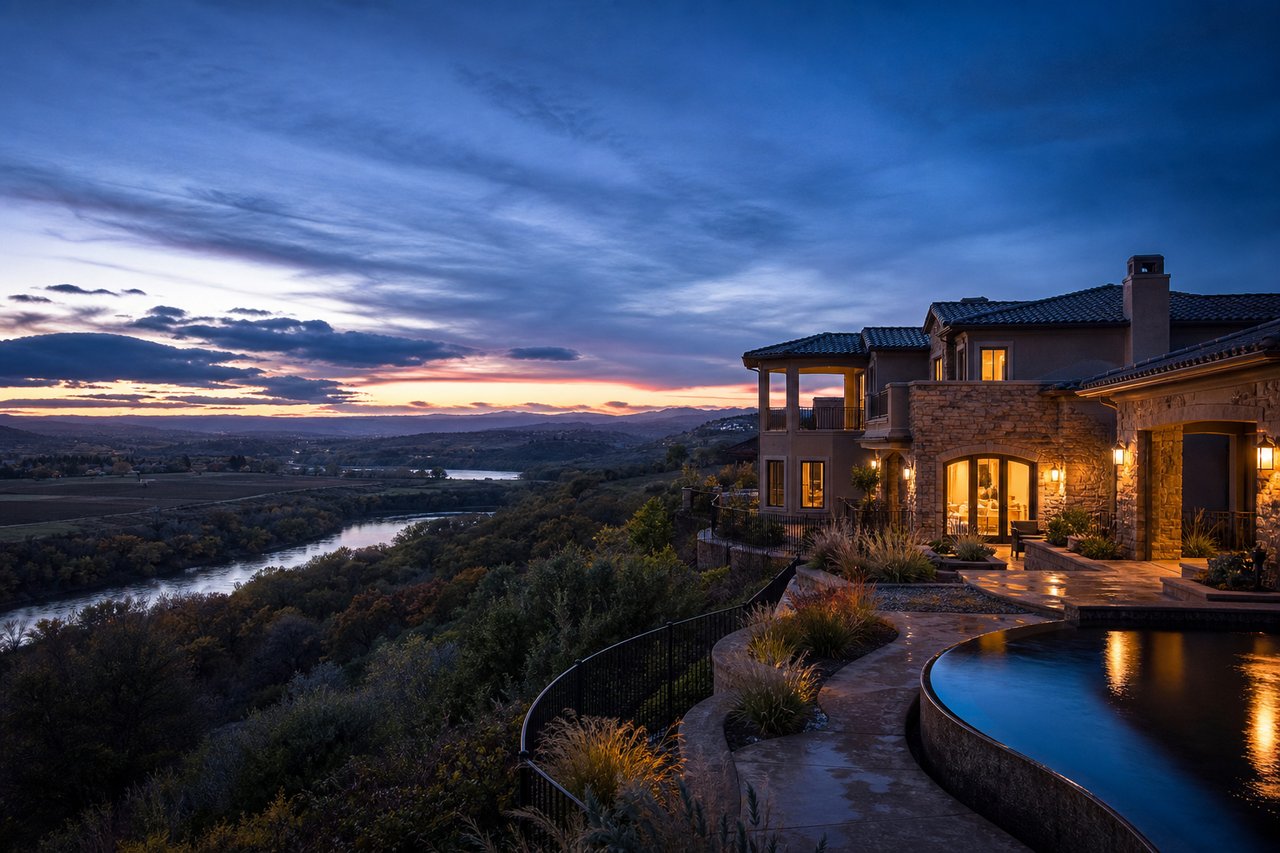
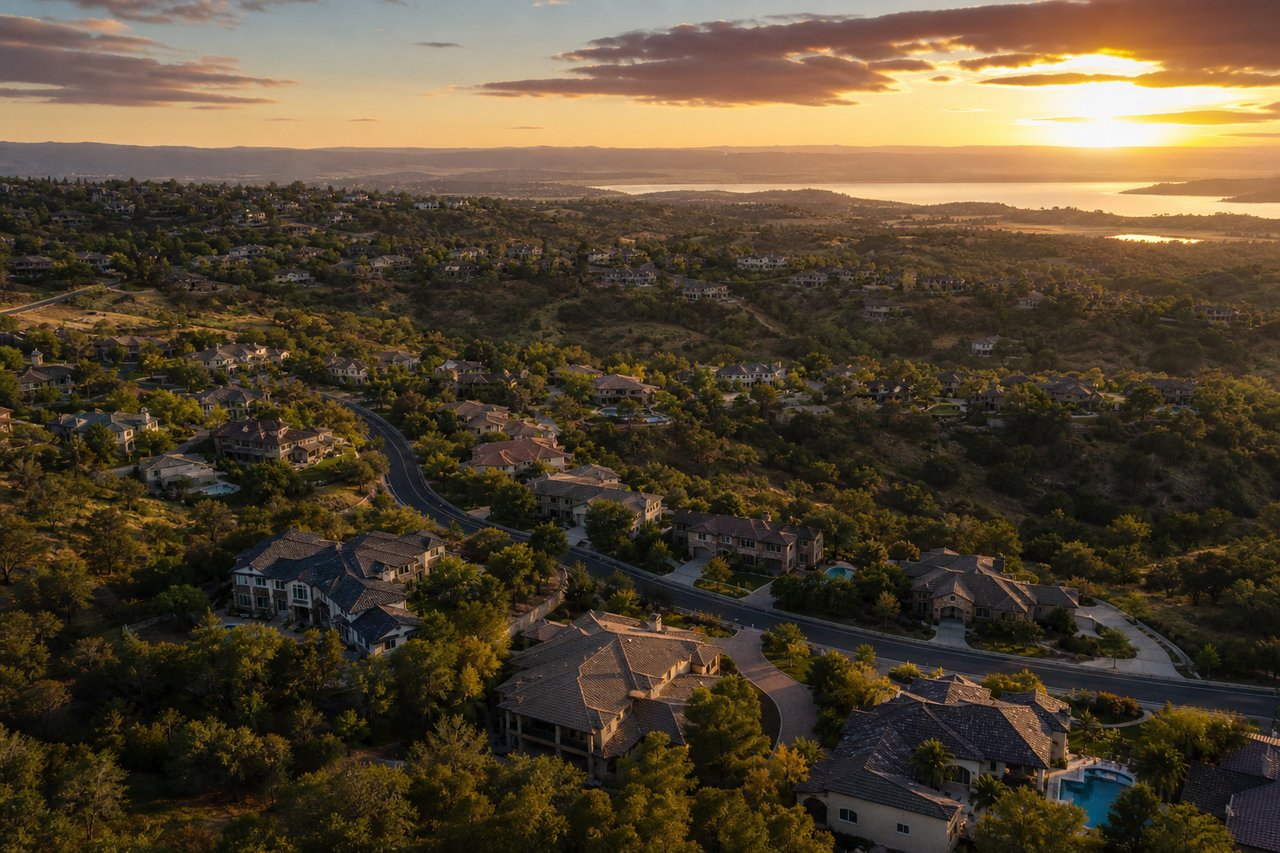
El Dorado Hills has real elevation changes. Neighborhoods like The Promontory and parts of Serrano sit on hillsides with views that genuinely rival anything you'd find in the Bay Area foothills, but those same streets can be steep, and the wind exposure at the top of a ridge is different from a sheltered lot two streets down. Touring lets you drive those roads, assess whether the grade is manageable for daily life, and decide whether the view is worth the tradeoff.
Noise is another one. A neighborhood that looks peaceful in listing photos may back up to a major arterial. A subdivision that seems tucked away may have a school or a shopping center one block over that creates real traffic at certain hours. Touring at different times of day, morning commute, school pickup, early evening, is the only way to experience what the neighborhood actually sounds and feels like.
Wildfire awareness and disclosure review
El Dorado County is a wildfire-aware market. Some neighborhoods sit in higher fire-hazard zones than others, and that affects insurance availability, costs, and the overall risk profile of a purchase. I walk every buyer I work with through careful disclosure review and inspection coordination so there are no costly surprises after closing. Touring neighborhoods lets you see the vegetation, the defensible space, and the proximity to open land firsthand, context that matters when you're reading a Natural Hazard Disclosure report later in the transaction. The California Office of the State Fire Marshal maintains the official Fire Hazard Severity Zone maps, which I review with every buyer before we write an offer.
Schools, parks, and the community feel
Many Bay Area relocators prioritize schools, and the El Dorado Union High School District and the El Dorado County Office of Education both publish enrollment and boundary information. But school boundaries and district lines don't tell the whole story. Touring lets you visit campuses, see the after-school traffic pattern, and get a feel for the parks, trails, and community centers that are part of daily life in a given neighborhood. The difference between a subdivision that's a five-minute walk from a trailhead and one that requires a ten-minute drive to reach open space is something you feel immediately on a tour.
If you want a deeper look at some of the neighborhoods that don't always show up on a standard search, my post on hidden gems in El Dorado Hills covers some of the communities I think deserve more attention from Bay Area buyers.
How to make the most of your tour
Here's what I walk every Bay Area client through before their first visit:
- Get pre-approved first. With median days on market in the several-week range, you have time to tour thoughtfully, but not time to scramble for financing after you find the right home. Have your pre-approval letter ready before you arrive.
- Plan for at least two full days. El Dorado Hills and Folsom together cover enough ground that a single afternoon won't do it justice. Budget for a focused two- or three-day visit.
- Drive your commute route during actual commute hours. Leave from the front door of a home you're seriously considering at the time you'd actually leave for work. Map it to your real office address, not just "San Francisco."
- Tour neighborhoods at different times of day. Morning, school pickup, and early evening each reveal something different about traffic, noise, and the general pace of the neighborhood.
- Ask your agent to update you on new listings in real time during your visit. Inventory can shift quickly, and a home that wasn't listed on Monday may be available by Wednesday.
- Note proximity to US-50 on-ramps. For hybrid commuters, the difference between a two-minute and a ten-minute drive to the freeway adds up fast over a year.
- Look at the vegetation and open space around each neighborhood. In a wildfire-aware county like El Dorado, the landscape around a home matters beyond just aesthetics.
For a step-by-step look at how to actually schedule showings once you're ready, my post on how to schedule a home tour in El Dorado Hills walks through the logistics.
Your specific neighborhood fit depends on your commute schedule, your budget, your lifestyle priorities, and how you want to use your outdoor space. That's exactly the kind of question I walk my clients through before we ever pull up a listing, and it's the reason I'd rather spend a morning driving neighborhoods with you than send you a Zillow link.
If you want to know what I've seen work for Bay Area buyers in this market, read my reviews on Google and Zillow.
Frequently Asked Questions
How long is the commute from El Dorado Hills or Folsom to the Bay Area for a hybrid schedule?
The honest answer is: it depends on your specific origin, destination, and departure time. El Dorado Hills and Folsom both sit along the US-50 corridor east of Sacramento, and door-to-door drive times to Bay Area job centers vary significantly based on where in the neighborhood you live and which Bay Area city you're heading to. The best way to test it is to use a live-traffic mapping app from the front door of a specific home to your actual office address during your expected commute window, ideally on a day you can visit in person. For hybrid schedules of one to three days per week, many buyers find it manageable, but the only honest answer is the one you test yourself.
Does the drop in El Dorado Hills median prices mean it's a buyer's market right now?
The market is more nuanced than a simple buyer's or seller's label. According to CA Housing Market News reporting on Redfin data, the median price fell more than 11% year over year for the three months ending July 2026, but price per square foot actually rose about 3% over the same period, and sales volume increased nearly 15%. That combination suggests buyers are getting more for their money in some segments, while well-priced homes in desirable neighborhoods are still attracting real competition. Where you have negotiating room depends heavily on the specific neighborhood and price tier, which is exactly why touring multiple areas matters.
What's the difference in feel between El Dorado Hills and Folsom for a Bay Area buyer?
El Dorado Hills tends to offer more hillside topography, larger lots in established communities, and a quieter, more semi-rural character in its upper neighborhoods. Folsom has a more established retail core, a historic downtown, and certain districts with stronger walkability, which Bay Area buyers accustomed to walkable neighborhoods often notice immediately. Neither is objectively better; the right fit depends on whether you prioritize space and quiet or proximity to restaurants, shops, and a more urban-adjacent energy. Touring both on the same trip is the fastest way to know which resonates with you.
What should I look for when touring El Dorado Hills neighborhoods for the first time?
Beyond the homes themselves, pay attention to: proximity to US-50 on-ramps (critical for hybrid commuters), road noise from major arterials, the topography of the streets (steep hillside vs. flat tract), vegetation and open space around the neighborhood (relevant to wildfire risk in El Dorado County), and the proximity to parks, trails, and everyday retail. Tour at different times of day, morning and school-pickup hours reveal traffic patterns that midday visits won't show. The California Office of the State Fire Marshal's Fire Hazard Severity Zone maps are also worth reviewing before you tour, so you know what to look for on the ground.
How much more house can I realistically get in El Dorado Hills compared to what I could afford in the Bay Area?
The most recent data available, from Resideline's August 2026 overview, puts the median sold price in El Dorado Hills at approximately $900,000 with a median of around $363 per square foot. Depending on where in the Bay Area you're coming from, that same budget can buy significantly more interior square footage and lot size in El Dorado Hills, but the exact tradeoff varies by neighborhood and home type. The best way to understand what your specific budget gets you here is to tour several price points and product types with a local agent who can show you the range firsthand.
The bottom line
El Dorado Hills is not a monolithic market, and no amount of online research replaces the experience of driving its neighborhoods, testing its commute routes, and standing in its yards. If you're relocating from the Bay Area, a focused in-person tour is the single most valuable thing you can do before you make an offer.
I've helped hundreds of Bay Area buyers find the right neighborhood in El Dorado Hills and Folsom, and I'm happy to put together a custom tour itinerary based on your priorities. Start with a free home valuation or reach out to schedule a consultation, let's figure out which neighborhoods actually fit your life before you commit to anything.
Equal Housing Opportunity. Tiegen Boberg, Broker Associate, Nick Sadek Sotheby's International Realty; Member, MetroList MLS (Sacramento Region); California Department of Real Estate. This article is general information only and is not legal, tax, or financial advice. Verify all property facts, pricing, availability, commute times, school boundaries, and fire-hazard classifications independently, and confirm your own numbers with your attorney, tax advisor, lender, or escrow officer.