What do relocators from the Bay Area need to know before moving to El Dorado Hills?
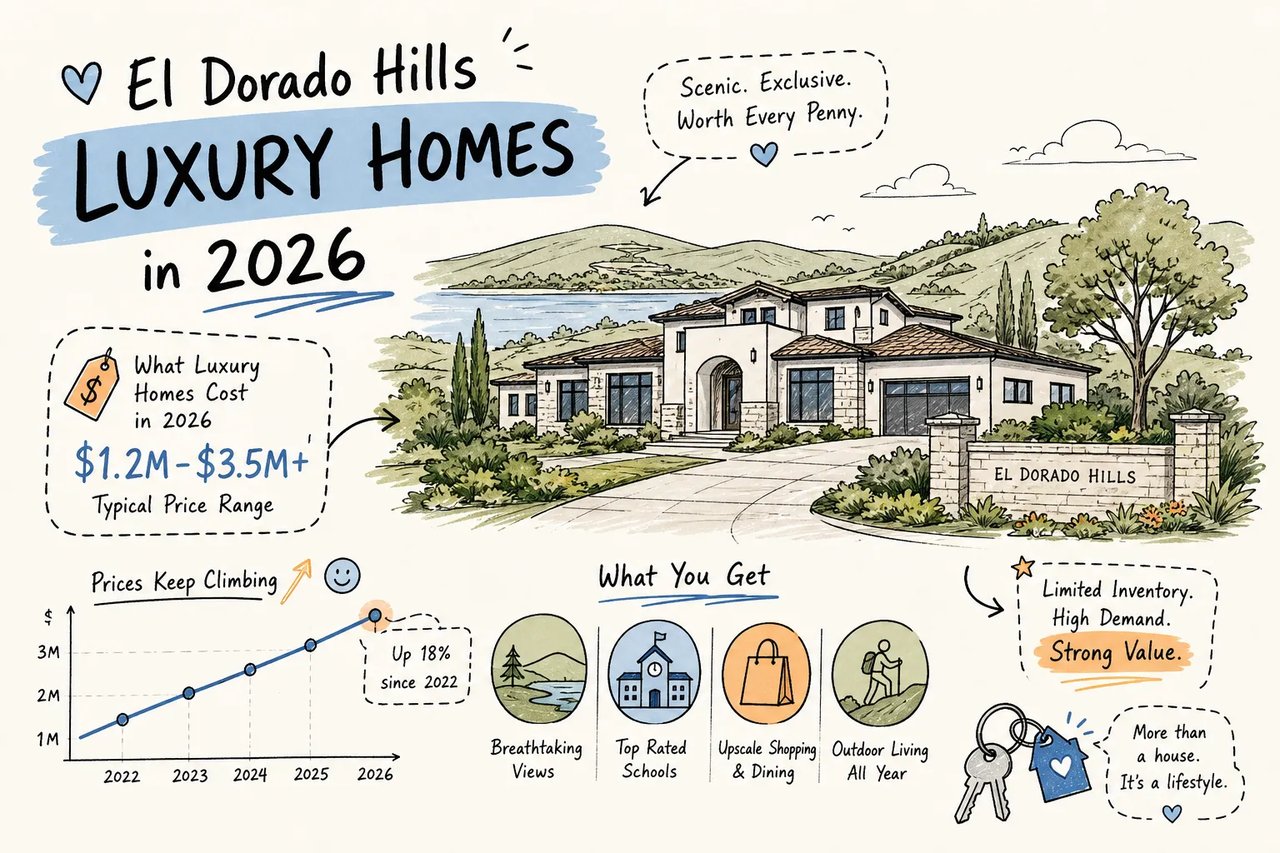
El Dorado Hills is an unincorporated community in El Dorado County with master-planned neighborhoods, significantly lower home prices than the Bay Area, and a median household income of $159,733 per the latest Census estimates. Buyers typically shop by subdivision, school zone, and HOA amenities rather than by city district, because there is no incorporated city government here. Understanding that structure before you tour saves a lot of time and prevents costly mismatches.
I've helped hundreds of Bay Area relocators land in El Dorado Hills, and the ones who do it well all share one thing: they toured neighborhoods in person before committing. Listing photos don't tell you whether a neighborhood's commute reality works for your life, or whether the lot sizes and community feel match what you pictured. That's the single most important piece of advice I give every relocating buyer I work with.
Understanding El Dorado Hills: Structure, Neighborhoods, and What to Expect
The first thing to understand is that El Dorado Hills is not a city. It's an unincorporated community governed at the county level by El Dorado County. That means no city council, no city police department, and no city-run utilities in the traditional sense. Services, zoning, and permitting all flow through the county. For most residents, this is invisible day-to-day, but it matters when you're comparing tax bills, special district assessments, and municipal services against a place like Folsom.
Folsom, by contrast, is an incorporated city in Sacramento County, with its own city government, municipal services, and distinct tax structure. The City of Folsom had a population of 50,547 in the 2020 Census, per the U.S. Census Bureau, though that figure is now several years old. The two communities sit next to each other and share some infrastructure, but they are not the same place administratively or financially.
The Neighborhood Landscape
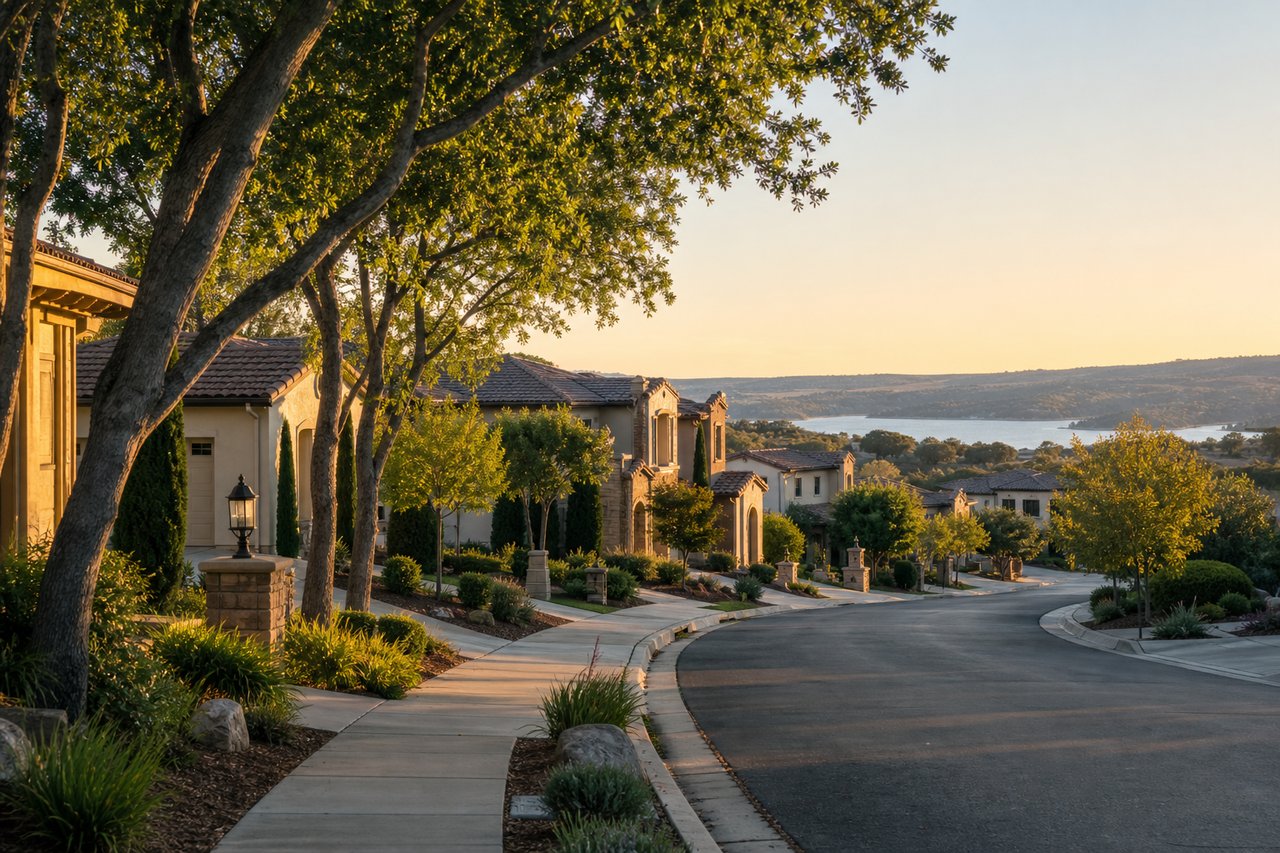
Because El Dorado Hills is unincorporated, neighborhood identity is almost entirely defined by subdivisions and HOA communities. When buyers ask me about the best area, the real question is: which community fits your priorities? Here's how I frame the major ones for relocating clients:
- Serrano and Serrano Country Club: The flagship master-planned community in El Dorado Hills. Gated sections, a private golf course, and larger estate-style lots. This is where buyers who want a defined luxury enclave with strong HOA standards tend to land. If you're comparing this to a Pleasanton or Danville neighborhood, Serrano is the closest analog in terms of feel and price tier.
- Blackstone: A newer master-planned community with resort-style amenities, a community pool complex, and a mix of price points from move-up to luxury. Popular with buyers coming from the South Bay who want a community with visible amenities and walkable gathering spaces.
- The Promontory: Elevated terrain, larger lots, and panoramic views. More spread out than Blackstone, with a quieter feel. I've written more about the amenities at The Promontory if you want a deeper look.
- Highland Hills: Mid-tier price point with established trees, larger parcels, and a more relaxed HOA environment. Good option for buyers who want more land without the full Serrano price tag. I've covered what living in Highland Hills is actually like in a separate post.
- Heritage El Dorado Hills, Kalithea, St. Andrews, Bass Lake Hills, Marble Valley, New York Creek, Green Springs Ranch: Each has its own character, lot size range, and HOA structure. These are the neighborhoods I walk clients through once I understand their budget, commute needs, and lifestyle priorities.
- Folsom Ranch and Carson Creek: Newer construction on the Folsom side, appealing to buyers who want updated floor plans and lower maintenance. Worth considering alongside El Dorado Hills proper if you're open to the Sacramento County side of the border.
If you want to go deeper on what makes El Dorado Hills distinctive beyond the headline neighborhoods, I'd point you to my post on hidden gems in El Dorado Hills worth knowing before you buy.
The Numbers: Home Values, Income, and What Bay Area Buyers Actually Find Here
The most recent published data from the U.S. Census Bureau's American Community Survey (2020–2024 five-year estimates) puts the median home value in El Dorado Hills CDP at $844,500 and the median household income at $159,733. Folsom's median home value in the same estimates is $734,700, with a median household income of $146,388.
For context: those figures represent the Census Bureau's latest published estimates available as of August 2026, and active market conditions may differ. Current list prices and sold data shift faster than ACS cycles. What these numbers confirm is the directional story most Bay Area relocators already suspect: you get meaningfully more home for your dollar here than in Marin, the Peninsula, or most of the East Bay, at an income level that reflects a highly educated, high-earning community.
Area | Median Home Value (2020–2024 ACS) | Median Household Income (2020–2024 ACS) | Governance |
|---|---|---|---|
El Dorado Hills CDP | $844,500 | $159,733 | Unincorporated, El Dorado County |
Folsom City | $734,700 | $146,388 | Incorporated, Sacramento County |
Source: U.S. Census Bureau, 2020–2024 ACS 5-year estimates. These are the latest published figures available as of August 14, 2026.
Property Taxes: What to Budget For
California property taxes are governed by Proposition 13's 1% base tax rate, but your actual bill will include voter-approved local assessments layered on top of that base, according to the California State Board of Equalization. In El Dorado Hills, those local assessments can include Mello-Roos community facilities districts, HOA fees, and special district charges that vary by subdivision. Serrano carries different assessments than Blackstone, which carries different assessments than a non-HOA parcel in Bass Lake Hills.
The honest answer to "what will my property taxes be?" is: it depends on the specific parcel, the special districts it sits in, and the assessed value at purchase. I always tell buyers to pull the actual tax bill for any home they're seriously considering, not just estimate from the base rate. Your lender and escrow officer can help you confirm the full picture before you close.
Commute Reality
El Dorado Hills sits roughly 25 miles east of Sacramento along US-50. The Sacramento commute, depending on traffic and your specific origin/destination, runs 30–45 minutes most days. The Folsom commute is shorter, often 15–20 minutes depending on your neighborhood.
A Bay Area commute is a different calculation entirely. If you're working in San Francisco or the South Bay and planning to commute from El Dorado Hills even two or three days a week, that's a 2.5-to-3-hour drive each way on a typical day. Most of my Bay Area relocating clients are either fully remote, hybrid with Sacramento-area offices, or have already accepted that the Bay Area commute is behind them. If that's not your situation yet, the commute reality needs to be part of your decision before you fall in love with a house. I'd also point you to my Folsom relocation and commute guide for a parallel look at the neighboring community.
Lifestyle and Amenities
El Dorado Hills Town Center serves as the community's main retail and dining hub, with restaurants, shops, and services concentrated in a walkable outdoor setting. Beyond that, the area's biggest draws are outdoor: Folsom Lake State Recreation Area, the American River Parkway trail system, and dozens of miles of hiking and biking trails that connect many of the major subdivisions.
The California State Parks system manages Folsom Lake, which provides boating, swimming, fishing, and trail access that residents treat as their backyard. For buyers coming from the Bay Area, the access to open space here is one of the most frequently cited reasons they don't look back.
Your specific situation, whether that's budget, school zone, lot size, or HOA preference, determines which neighborhood makes sense. That's exactly the kind of question I walk my clients through before we ever schedule a showing.
If you've found this guide useful, I'd invite you to read what other buyers and sellers have said about working with me on Google and Zillow.
Frequently Asked Questions
Is El Dorado Hills a good place to live if I'm commuting to the Bay Area?
It depends entirely on your commute frequency. El Dorado Hills is roughly 130 miles from San Francisco, which translates to a 2.5-to-3-hour drive each way under normal conditions. Most buyers relocating here are fully remote or commuting to Sacramento-area employers, not to the Bay Area daily. If you're hybrid with occasional Bay Area trips, it's manageable. If you're in the office three or more days a week in San Francisco or the South Bay, the commute math is difficult.
How does El Dorado Hills compare with Folsom for home prices?
Based on the most recent U.S. Census Bureau ACS estimates (2020–2024), El Dorado Hills carries a higher median home value ($844,500) than Folsom ($734,700). El Dorado Hills also has a higher median household income. The price difference reflects the larger lot sizes, more estate-scale inventory, and the concentration of luxury master-planned communities like Serrano in El Dorado Hills. Folsom offers newer construction at more accessible price points in communities like Folsom Ranch and Carson Creek.
What is the property tax rate in El Dorado Hills?
California's Proposition 13 sets a 1% base tax rate on assessed value, per the California State Board of Equalization. In El Dorado Hills, your actual bill will be higher than 1% once voter-approved local assessments, Mello-Roos charges, and special district fees are added, and those vary significantly by subdivision and parcel. Always pull the actual tax bill for any specific property before finalizing your budget.
Are there HOAs in most El Dorado Hills neighborhoods?
Yes, the majority of El Dorado Hills' major subdivisions are HOA-governed, particularly in master-planned communities like Serrano, Blackstone, and The Promontory. HOA fees, rules, and included amenities vary widely by community. Some neighborhoods have multiple layers of HOA (a master HOA plus a sub-association), which affects your monthly carrying costs. Reviewing CC&Rs and the HOA's financials is a standard part of due diligence for any purchase here.
What are the best parks, trails, and outdoor amenities in El Dorado Hills?
Folsom Lake State Recreation Area is the centerpiece, offering boating, swimming, fishing, and miles of trails managed by California State Parks. The American River Parkway trail system connects much of the region for cycling and hiking. Many El Dorado Hills subdivisions also have internal trail networks and community parks maintained by their HOAs. Outdoor access is one of the most consistent reasons Bay Area relocators cite for choosing this area over closer-in Sacramento suburbs.
The Bottom Line
El Dorado Hills rewards buyers who do their homework on neighborhoods, commute reality, and the specific costs attached to each subdivision, not just the headline home price. The right neighborhood for you depends on factors that no listing search can surface on its own.
I've helped over 1,500 clients navigate this market, and the most important thing I can do for a relocating buyer is give you a grounded, honest picture before you make a decision this significant. Request a free home valuation or relocation consultation and let's map out the right move for your situation.
Equal Housing Opportunity. Tiegen Boberg, Broker Associate, Nick Sadek Sotheby's International Realty; Member, MetroList MLS (Sacramento Region). California Department of Real Estate. This article is general information only and is not legal, tax, or financial advice. Confirm all property-specific figures, tax assessments, and closing costs with your attorney, tax advisor, lender, or escrow officer.