What should Bay Area buyers know before moving to El Dorado Hills?
El Dorado Hills is a master-planned foothill community east of Sacramento where Bay Area buyers typically find newer construction, larger lots, and more purchasing power than they had back home. The recent median sale price was approximately $904,000 for the three months ending August 2026, a fraction of what that budget buys in most Bay Area markets. The honest caveat: this market rewards buyers who have already worked out the commute math and understand how planned-community living differs from a Bay Area suburb.
Key Takeaways
- The El Dorado Hills median sale price was approximately $904,000 for the three months ending August 2026, according to CA Housing Market News.
- Folsom's median for the same period was approximately $759,000, making it a lower entry point with broader neighborhood variety and more established commercial services.
- El Dorado Hills is best suited to remote workers, hybrid schedules, and Sacramento-area commuters, not buyers who need to be in a Bay Area office five days a week.
- Active inventory exceeded 500 listings in the August 2026 snapshot, giving relocating buyers meaningful selection across price points and neighborhoods.
- Neighborhood due diligence matters here: HOA rules, Mello-Roos assessments, school boundaries, and wildfire considerations can vary significantly between adjacent subdivisions.
How does El Dorado Hills compare to the Bay Area on price and inventory?
The short answer: your dollar goes much further. According to CA Housing Market News, El Dorado Hills posted a median sale price of approximately $904,000 for the three months ending August 2026, with more than 500 active listings in the same snapshot. That level of inventory means you're not walking into a market where every home draws ten offers the first weekend.
For context, Folsom, El Dorado Hills' neighbor to the northwest, recorded a median of approximately $759,000 for the same period, a 5.1% year-over-year decline, per CA Housing Market News. Both communities saw median prices soften year over year, which is worth noting if you're timing a purchase around market momentum.
I tell every Bay Area buyer I work with: these are city-level medians. The actual price you'll pay depends on the subdivision, lot size, year built, HOA tier, and whether the home has been updated. That's why I walk clients through a neighborhood-by-neighborhood comparison before we start touring, the spread within El Dorado Hills alone can be substantial.
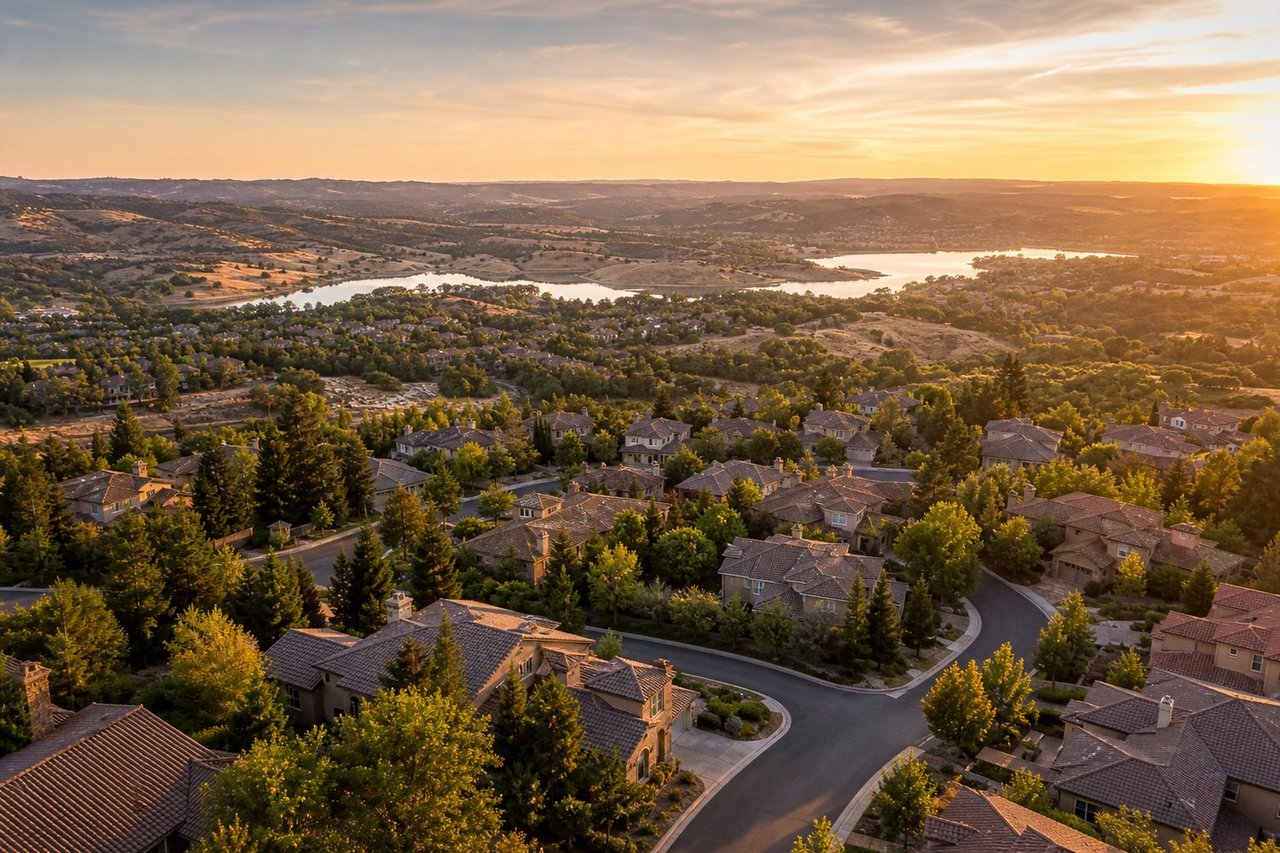
Beyond the numbers, El Dorado Hills is a newer community. You'll find planned subdivisions like Serrano, Blackstone, and The Promontory with amenities, trails, and community centers built into the design. If you're coming from a Bay Area suburb where the housing stock is 40 to 60 years old, the difference in home condition and layout is immediately noticeable.
Can you realistically commute from El Dorado Hills to the Bay Area?
Technically yes, practically, it depends entirely on how often you need to go. El Dorado Hills sits roughly 130 miles from San Francisco and about 110 miles from San Jose. On a clear day with no traffic, that's two hours each way. In real commute conditions, plan for significantly more.
The buyers I see make this work fall into three categories: fully remote employees who might travel to the Bay Area once or twice a month, hybrid workers on a two-day-in-office schedule who are willing to make the drive or fly from Sacramento International Airport, and households where one partner works in Sacramento and the other has a remote role. The Sacramento Regional Transit system connects Folsom and the broader Sacramento area for local commuters, but there is no direct rail service to the Bay Area from El Dorado Hills itself.
If your employer requires you in a Bay Area office four or five days a week, I'll be straight with you: this relocation will be harder to sustain than it looks on paper. The buyers who thrive here have already stress-tested their commute situation before they start house-hunting. I always recommend touring the area on a workday, not just a weekend, so the drive reality is clear before you're in contract.
What about getting around locally?
For day-to-day life, El Dorado Hills and Folsom are car-dependent communities. El Dorado Hills Town Center handles most retail, dining, and services needs. Folsom adds a broader commercial corridor, a historic downtown, and connections to the Folsom Stage Line bus service. Both communities sit close to Highway 50, which is the primary artery connecting the foothill communities to Sacramento and points west.
Outdoor access is genuinely one of the draws here. Folsom Lake State Recreation Area, the American River Parkway trail network, and the Folsom Lake Crossing trail put significant recreation infrastructure within a short drive or bike ride of most neighborhoods. For buyers relocating from the Bay Area who are used to weekend access to trails and open space, this is a real lifestyle upgrade, not a trade-off.
What do Bay Area buyers get wrong about El Dorado Hills?
The biggest mistake I see is assuming all of El Dorado Hills is interchangeable. It isn't. Neighborhoods like Serrano, Serrano Country Club, Blackstone, and Highland Hills each have different HOA structures, amenity packages, and Mello-Roos or special-tax obligations. Two homes on adjacent streets can carry meaningfully different annual carrying costs depending on which assessment district they sit in.
Wildfire awareness is also part of the due diligence picture in El Dorado County. Some neighborhoods sit in higher fire-hazard severity zones than others, which affects insurance availability, evacuation planning, and defensible-space requirements. California's Fire Hazard Severity Zone maps, maintained by CAL FIRE, are a good starting point, but I walk every buyer through the specific disclosures for each property we consider.
School boundaries are another area where the map can mislead you. El Dorado Hills is served by the El Dorado Union High School District and the Buckeye Union School District for elementary grades, but the boundary a specific address falls in depends on its exact location, not the neighborhood name. Verify the boundary for any home you're seriously considering, not the general area.
Finally, don't skip the in-person tour. I wrote about this directly in why Bay Area buyers should tour El Dorado Hills before committing, photos don't tell you what the morning drive feels like, how far the grocery store is from a specific subdivision, or whether the community's pace matches yours. That ground-level read matters more than any listing portal can convey.
Your specific picture, which neighborhoods fit your budget, which HOA structures make sense, and how the commute math actually works for your employer, is something I work through with every relocating buyer individually. There's no substitute for running those numbers with someone who knows this market.
If you want to see what buyers in this market are reading before they make the move, read my Google reviews or check out what past clients have said on Zillow.
Frequently Asked Questions
Is El Dorado Hills cheaper than the Bay Area for homebuyers?
Yes, significantly. El Dorado Hills posted a median sale price of approximately $904,000 for the three months ending August 2026, while Folsom came in around $759,000 for the same period. Bay Area markets in comparable suburban areas routinely run $1.3 million to $2 million or more for a similar-sized home, so the purchasing-power difference is real and substantial. That said, factor in HOA fees, Mello-Roos assessments, and property tax rates when comparing true carrying costs.
What is the difference between buying in El Dorado Hills and Folsom?
El Dorado Hills generally features newer planned communities, larger lots, and foothill topography, with a higher median price point. Folsom offers a broader mix of established and newer neighborhoods, more commercial and employment infrastructure, and better local transit connections. The right choice depends on your priorities for home style, lot size, commute access, and community feel, and both markets have meaningful inventory right now.
Can I commute from El Dorado Hills to the Bay Area?
You can, but it's a significant undertaking. El Dorado Hills is roughly 130 miles from San Francisco, translating to two or more hours each way depending on traffic and time of day. This market works well for remote workers, hybrid employees with limited in-office days, and Sacramento-area commuters, it's a harder fit for anyone required in a Bay Area office most of the week.
Does El Dorado Hills have public transportation to Sacramento?
El Dorado Hills does not have direct light-rail service, but it connects to the broader Sacramento commuter network via Highway 50. Folsom has bus connections through the Folsom Stage Line, and Sacramento Regional Transit light rail runs from Folsom into downtown Sacramento. For most residents, a car is the practical primary transportation option for daily use.
What should Bay Area buyers know before moving to El Dorado Hills?
Three things matter most: understand the commute reality before you're in contract, verify HOA fees and Mello-Roos assessments for the specific subdivision (not just the general area), and review wildfire hazard disclosures carefully. El Dorado County's foothill setting is part of the appeal, but it also means some properties carry fire-hazard considerations that don't exist in most Bay Area suburbs. A thorough inspection and disclosure review with a local agent who knows the area makes a material difference.
Are Folsom and El Dorado Hills good places for outdoor recreation?
Both communities sit adjacent to Folsom Lake State Recreation Area and the American River Parkway trail system, which together offer boating, swimming, mountain biking, and miles of paved and unpaved trails. The foothill setting also puts residents within reasonable driving distance of Lake Tahoe and the Sierra Nevada. For buyers who prioritize outdoor access, this geography is one of the most compelling arguments for the relocation.
Ready to see what your Bay Area budget actually buys in El Dorado Hills? Request a free home valuation or consultation and I'll walk you through the current market, neighborhood by neighborhood.
Equal Housing Opportunity. Tiegen Boberg, Broker Associate, Nick Sadek Sotheby's International Realty; Member, MetroList MLS (Sacramento Region); California Department of Real Estate. This article is general information only and is not legal, tax, or financial advice. Confirm your specific costs and transaction details with your closing agent, tax advisor, or lender.