What happens if the appraisal comes in low after my offer is accepted?
When the appraisal comes in low, your lender bases the loan on the lower of the purchase price or the appraised value, so you're left with a gap to close. You can ask the seller to reduce the price or share the gap, bring extra cash, challenge the valuation with evidence, or cancel if your appraisal contingency is still active. Which of those you can actually use depends on your signed contract.
Key Takeaways
- A low appraisal does not automatically cancel a California purchase contract, and your rights turn on your exact agreement and whether you've removed or waived the appraisal and loan contingencies.
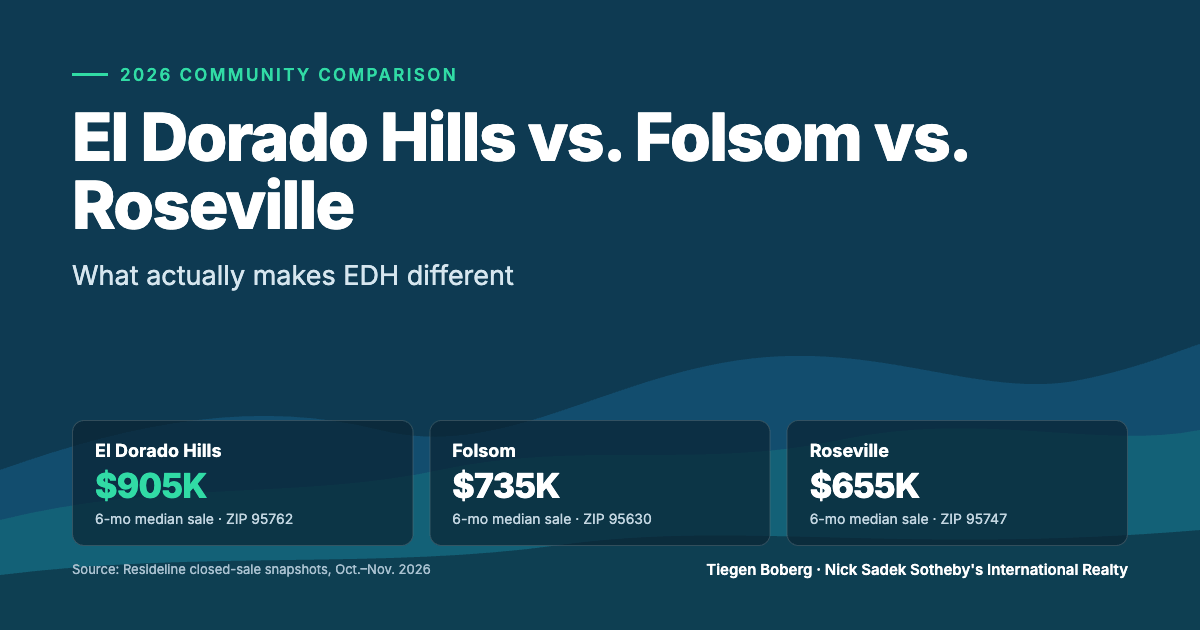
- In El Dorado Hills, Redfin reported a median sale price of about $928,000 for the three months ending October 2026, down 5.2% year over year, with homes selling in about 48 days.
- In Folsom, Redfin reported a median sale price of about $741,000 for the three months ending September 2026, down 3.7% year over year, with homes selling in about 31 days.
- The standard California Association of REALTORS® Residential Purchase Agreement commonly sets the appraisal contingency at 17 days after acceptance, but the signed contract controls.
- A reconsideration of value request works when it points to specific errors or missing comparable sales, not when it simply says the number feels too low.
What should you do first when the appraisal comes in low?
Pull out your signed contract and confirm three dates: the acceptance date, your stated appraisal-contingency deadline, and any written extension or removal. Everything else you do depends on those.
The 17-day period in the standard California Association of REALTORS® Residential Purchase Agreement is a contract term, not a statutory deadline. Your agreement may say something different. It also matters whether you already signed a contingency removal, because that changes your leverage completely.
Do you still have your appraisal contingency?
If the contingency is active and the appraised value is below the contract price, you may have a contractual basis to ask to cancel, subject to the agreement's notice requirements and other terms. The California Department of Real Estate's Reference Book, Chapter 20: Real Estate Finance covers how financing contingencies work in this state.
Don't assume that simply refusing to proceed protects your deposit. Follow the written notice steps in the contract, and talk with your agent and the closing agent holding your deposit before you send anything. If there's a real dispute about default or deposit, that's when a California real estate attorney belongs in the conversation.
What does the appraisal report actually say?
Ask your lender for the full report, not just the number. Read the comparable sales the appraiser chose, the adjustments made, and the property details they recorded. Errors in bedroom count, square footage, lot size, or upgrades show up here, and they matter if you decide to challenge the value.
For a refresher on how the process works from order to report, Tiegen's post on how home appraisals work in El Dorado Hills covers the mechanics.
What are your options when the Appraisal Comes in Low?
You have five realistic paths: renegotiate the price, split the gap, bring more cash, request a reconsideration of value, or cancel if your contingency allows it. None of them is automatic, and the seller isn't required to change the contract just because the number came back low.
Option | What it requires | Main risk |
|---|---|---|
Price reduction | Seller agrees in writing to a lower price | Seller can refuse and hold to the contract |
Split the gap | Both sides share the difference, with lender approval of the structure | Buyer still needs extra funds |
Buyer brings cash | Funds for the difference between price and supported value | Reduces your cash reserves |
Reconsideration of value | Lender-run process with specific evidence | Value may not change, and time keeps running |
Cancel | Active contingency and proper written notice | Deposit dispute if you've waived or missed a deadline |
How does the gap get covered?
Lenders generally use the lower of the purchase price or appraised value for loan-to-value purposes, according to Fannie Mae's Selling Guide. If the lender caps your loan at the lower value, you may need to fund the difference between the contract price and the supported value, subject to underwriting approval.
You may also ask about changing the loan structure, but a bigger loan is not guaranteed. The lender has to approve it, and higher leverage can affect cash requirements, mortgage insurance, and your monthly payment. Run those numbers with your loan officer before you agree to anything.
What can the seller do?
The seller can reduce the price, agree to share part of the gap, offer a permitted credit, wait while you pursue a reconsideration, or hold firm. If your contingency is active and you cancel, the seller may go back to the market or to another buyer. If you've removed the contingency, the seller has much less reason to move.
This is where a calm, well-documented request does more than an angry one. Sellers respond to a buyer who shows up with comparable sales and a clear proposal.
When does a reconsideration of value make sense?
A reconsideration of value (ROV) makes sense when you can point to something concrete the appraiser missed or got wrong. Fannie Mae requires lenders to maintain procedures for a borrower-initiated ROV when an appraisal may be deficient or unsupported, per its Appraisal Quality Matters guidance. The request should identify specific factual errors, omitted comparable sales, or relevant property information.
Useful evidence includes:
- Recent, genuinely comparable closed sales the appraiser left out
- Corrections to bedroom, bathroom, square-footage, lot, view, or amenity details
- Documentation of upgrades and condition
In El Dorado Hills and Folsom, comparables need care. Subdivisions, age of construction, lot size, planned-community amenities, and newer versus older housing stock vary a lot from one street to the next. A comp from a different build era can hurt your case instead of helping it. If you're weighing an ROV, Tiegen pulls and screens the comparables with you so the request is built on sales that hold up.
How do you plan for an appraisal gap before you write the offer?
Decide before you offer how much extra cash you'd be willing to bring and whether you'll keep your appraisal contingency. Competing offers that push the price above recent closed sales are the situation where a gap is most likely, so the plan belongs in the offer, not after the report.
What does the local market look like in 2026?
Here is the most recent private-provider data available for the two cities. Both come from Redfin, which is a private data provider, not an MLS or government agency, and the periods differ.
City | Period reported | Median sale price | Year over year | Typical time to sell |
|---|---|---|---|---|
El Dorado Hills | Three months ending October 2026 | About $928,000 | Down 5.2% | About 48 days |
Folsom | Three months ending September 2026 | About $741,000 | Down 3.7% | About 31 days |
Don't read these as a head-to-head comparison of the same home. The rolling periods and methods differ, and the mix of properties behind each median is different. A citywide median also tells you very little about your specific house. What matters for an appraisal is the set of nearby, truly comparable closed sales, and Tiegen builds that picture for each property before an offer goes in.
How do you protect yourself in a competitive offer?
- Know your ceiling. Agree with your loan officer on what you can fund above the appraised value without straining your reserves.
- Be deliberate about contingencies. Keeping or limiting the appraisal contingency is a strategic choice with real consequences. Tiegen's post on whether to waive or keep the inspection contingency works through similar trade-offs.
- Check the comps before you bid. If your number sits above nearby closed sales, expect the appraisal to be a pressure point.
- Calendar every deadline. Once you're under contract, Tiegen's walkthrough of what happens after an offer is accepted helps you see where the appraisal fits among the other dates.
Offer strategy in a contested situation is its own skill, and Tiegen's piece on offer strategy in competitive Serrano homes shows how those decisions play out. Your exact plan depends on your finances, your loan, and the specific property, which is why it's worth talking it through before you write the offer.
Curious how Tiegen's clients describe working with him? Read the reviews on Google and Zillow.
FAQ
What happens if the appraisal is lower than my accepted offer in El Dorado Hills?
Your lender will typically base the loan on the lower appraised value, which can leave a gap between what the loan covers and what you agreed to pay. You can negotiate the price, bring more cash, request a reconsideration of value, or cancel if your appraisal contingency is still active. The signed contract decides which of those you can use.
Can I cancel the purchase if the appraisal comes in low?
Possibly, if your appraisal contingency is still in place and you follow the contract's written notice requirements. If you've already removed or waived it, cancelling could put your deposit at risk. Check your contract and talk with Tiegen before you send any notice.
Can the seller lower the price after a low appraisal?
Yes, the seller can agree to a lower price, share the gap, or offer a permitted credit, but nothing requires it. Sellers are more likely to move when you still have an active contingency and can present clear comparable-sales evidence.
Should I ask for a reconsideration of value from the lender?
Ask for one if you can identify specific factual errors or missing comparable sales in the report. A request that only says the value feels too low rarely changes anything. Your loan officer submits it, and it takes time, so watch your contingency deadline while it's pending.
How long do I have to respond to a low appraisal in California?
It depends on your contract. The standard California Association of REALTORS® agreement commonly sets the appraisal contingency at 17 days after acceptance, but the parties can choose a different period or extend it in writing. Look up your stated deadline right away.
Ready to plan for an appraisal gap?
When the Appraisal Comes in Low, the best outcomes come from knowing your contract dates, your financing limits, and the local comparable sales before you need them. Tiegen walks buyers through that planning in El Dorado Hills and Folsom so a low number becomes a manageable decision, not a surprise. If you're writing an offer or already under contract, get a free home valuation and book a consultation with Tiegen.
Equal Housing Opportunity. Tiegen Boberg, Broker Associate, Nick Sadek Sotheby's International Realty; Member, MetroList MLS (Sacramento Region). Regulated by the California Department of Real Estate. This article is general information, not legal, tax, or financial advice. Confirm your own numbers with your closing agent, tax advisor, or lender.