How should you price a luxury home in El Dorado Hills?
Pricing a luxury home in El Dorado Hills means building a defensible market-value range from segmented comparables, not applying a citywide median to a one-of-a-kind property. The right price attracts qualified buyers in the first weeks, when market attention is highest, and a mispriced luxury home can sit long enough to lose negotiating leverage entirely.
Key Takeaways
- El Dorado Hills recorded 231 homes sold in the three months ending August 2026, up 16.1% year over year, with a citywide sale-to-list ratio of 99.0% and a median of 32 days on market, according to CA Housing Market News, but these are all-segment figures, and luxury homes operate in a separate buyer pool.
- Luxury pricing requires segmented comparables that match lot size, living area, architectural quality, views, pool, acreage, and community type, not just city and square footage.
- Serrano, gated communities, golf-oriented properties, and custom-home neighborhoods attract different buyers and should never be benchmarked against non-gated El Dorado Hills resales.
- A documented pricing range, with a clear explanation of which closed sales support each band, is more defensible than a round-number target.
- Strong showings with no offers signal a price-condition mismatch; weak showings signal an access or exposure problem. Both are diagnosable, neither requires a panic price cut.
If you're preparing to list a high-end property, the Selling a Luxury Home in El Dorado Hills: Expert Guide for 2026 covers the full process from preparation through closing.
Why citywide data alone won't price your luxury home
The most recent market data, from the three months ending August 2026, shows El Dorado Hills with 231 closed sales, 507 active listings, a median of 32 days on market, and a 99.0% sale-to-list ratio, according to CA Housing Market News. That's a healthy, active market. But those numbers describe the entire city, entry-level condos, mid-range production homes, and estate properties all rolled together.
A luxury home in Serrano or a custom estate in the hills is not competing with the median. It's competing with a much smaller pool of comparable properties, and the buyers for it are a much smaller, more deliberate group. Applying a citywide average to a $2M+ home is one of the fastest ways to underprice or overprice, and both outcomes cost you.
The California Association of REALTORS® consistently notes that luxury and upper-tier segments move differently from the broader market, longer decision cycles, more contingency negotiation, and greater sensitivity to condition and presentation. That's exactly what I see in this market.
El Dorado Hills is not one market, it's several
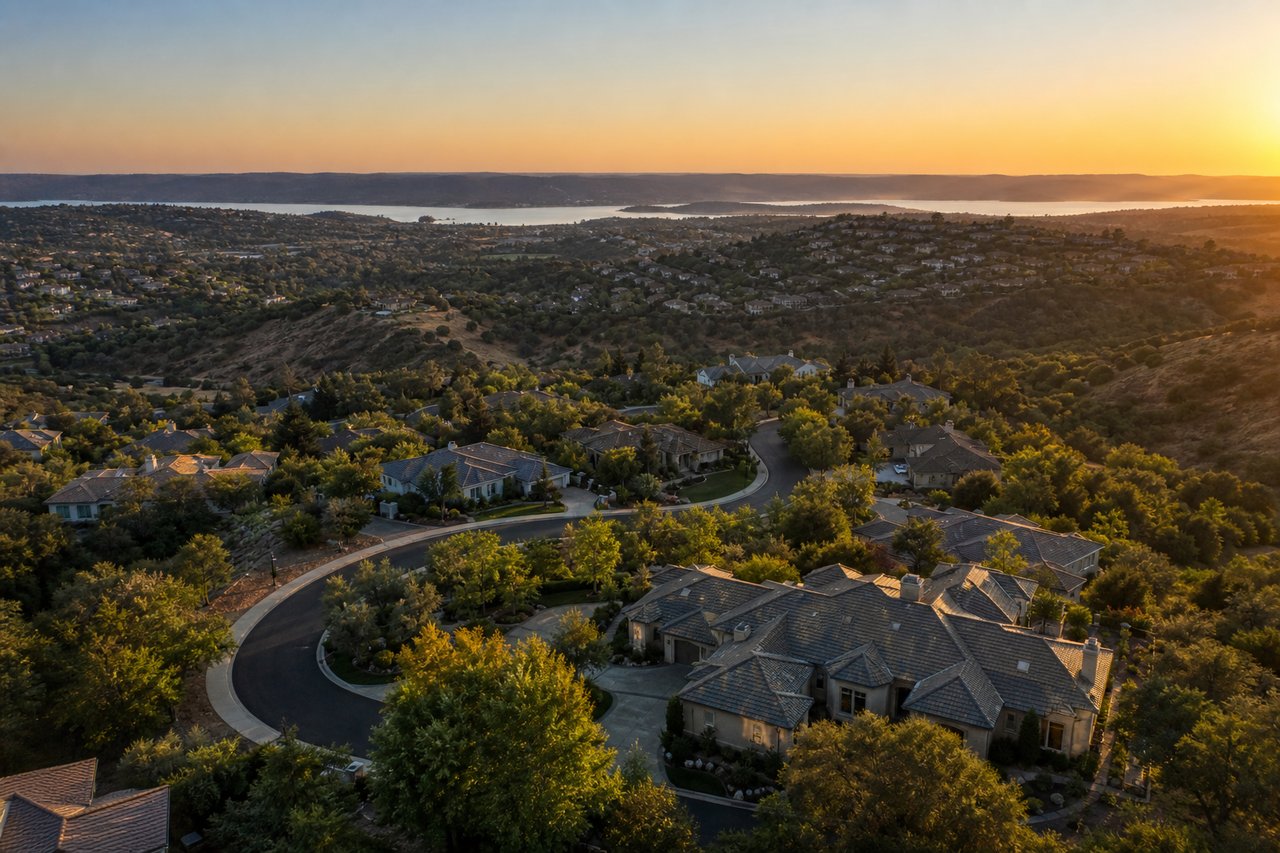
Serrano, Serrano Country Club, Blackstone, The Promontory, custom-home areas, and gated communities each attract different buyers and carry different pricing dynamics. A Serrano resale with golf-course access and HOA amenities is a fundamentally different product from a non-gated custom home in Highland Hills or Bass Lake Hills, even if both are the same square footage and the same city.
I build every luxury pricing analysis around the specific submarket, not just the ZIP code. That means pulling closed, pending, active, and withdrawn comparables with matching lot size, living area, age, architectural quality, views, pools, garages, guest or multigenerational spaces, acreage, security, and community amenities. The withdrawn sales matter as much as the closed ones, they tell you where the ceiling is.
How to build a defensible luxury pricing range
A defensible pricing range is one you can explain to a buyer's agent who challenges it. It identifies the floor (where the property is clearly underpriced relative to recent closed sales), the ceiling (where it starts competing with materially superior homes), and the band most likely to attract qualified buyers without leaving value behind.
Here's what goes into building that range for a luxury home in El Dorado Hills:
- Closed comparables from the last 90-180 days in the same submarket, with similar lot, size, age, finish level, and amenities. The fewer true comparables exist, the wider your analysis window needs to be.
- Active and pending competition, what a buyer will see alongside your home when they're actively shopping. If a superior home is listed at $50K less, that's a problem. If your home is the best option at your price point, that's an opportunity.
- Withdrawn and expired listings, these mark the price levels where buyers stopped engaging. They're the most overlooked data point in luxury pricing.
- Property-specific premiums and discounts, views, lot position, pool condition, guest house, three-car garage, smart home integration, and architectural uniqueness all affect where your home sits within the range.
- Days on market context, how long comparable homes sat, and whether price reductions were involved. A sale that closed at full price after 120 days tells a different story than one that closed in 14.
The National Association of REALTORS® has documented consistently that overpriced homes, even in strong markets, accumulate days on market that make buyers skeptical, often resulting in a final sale price below what a well-priced launch would have achieved. I've seen this play out repeatedly in El Dorado Hills. Pricing it right from day one isn't conservative, it's strategic.
One-of-a-kind properties need a different approach
Some luxury homes in El Dorado Hills are genuinely difficult to comp, a custom architectural home on acreage with Sacramento Valley views, or a Serrano estate with a resort-style pool and detached guest quarters. When true comparables don't exist, I use a combination of replacement-cost analysis, land value, and the closest available sales adjusted for the specific differences. I'll also be direct with you about the uncertainty in the range, because a false sense of precision on a unique property is worse than an honest range.
The launch plan is as important as the price
Getting the price right is step one. Executing the launch correctly is what converts that price into offers. Luxury buyers expect a different experience, private showings, advance notice, and sometimes confidentiality. They're also making a larger financial decision, which means longer decision cycles and more due diligence before an offer is written.
A well-structured launch for a luxury listing in El Dorado Hills includes:
- Professional photography, video, and floor plans completed before the home goes live, not scheduled for the week after. First impressions online drive whether a luxury buyer requests a showing at all. For guidance on preparing the home itself, see my post on staging your home for high-end El Dorado Hills buyers.
- Broker outreach before public launch, connecting with agents who represent active luxury buyers in the Sacramento region, not just waiting for the MLS to do the work.
- Showing access designed for the buyer, flexible scheduling, advance notice protocols, and a showing experience that matches the price point.
- A clear review point, typically two to three weeks in, where I sit down with you and evaluate showing volume, online engagement, and qualified-buyer feedback against the pricing strategy. That review is diagnostic, not reactive.
The CFPB's real estate resources note that buyers in higher price tiers typically take more time to evaluate a purchase and often involve legal and financial advisors in their process. That's true in El Dorado Hills, and it's why a luxury launch plan needs to anticipate a longer decision cycle rather than treating week-two silence as a failure.
Reading early market feedback correctly
Strong showings with no offers almost always mean one thing: buyers like the home but the price doesn't match what they see when they're standing in it. That's a condition or presentation issue, a price issue, or both, and the fix is different for each.
Weak showings mean something else: the home isn't reaching the right buyers, access is too restricted, or the price puts it outside the active buyer pool entirely. I've seen sellers mistake low showing volume for low demand when the real issue was a listing that wasn't being seen by the right people.
Any adjustment, to price, access, marketing, or presentation, should be based on actual comparable activity and qualified-buyer feedback, not on a timeline or a neighbor's opinion. The California Department of Real Estate emphasizes that sellers are entitled to clear, honest information from their agent throughout the listing period, and I take that seriously. You'll always know what the data says, not just what sounds encouraging.
If you're weighing what your El Dorado Hills luxury home could realistically sell for in today's market, the most useful next step is a no-obligation market analysis built around your specific property, not a Zestimate and not a citywide average. Request your free home valuation here and I'll put together a pricing range you can actually defend.
You can read what past clients have said about working with me on Google and Zillow.
FAQ: Pricing Luxury Homes in El Dorado Hills
How should I price a luxury home in El Dorado Hills right now?
Start with a segmented comparable analysis, closed, pending, active, and withdrawn sales that match your home's submarket, size, lot, finish level, and amenities. Citywide medians are a useful backdrop, but they don't reflect the luxury buyer pool. A defensible range, explained by the specific sales that support it, is more useful than a single number.
Is it better to price high and leave room to negotiate?
In my experience, pricing above the defensible range in El Dorado Hills's luxury market typically produces fewer qualified showings, longer days on market, and eventual price reductions that signal weakness to buyers. A well-supported price from launch generates more interest and stronger negotiating position than starting high and chasing the market down.
How do I compare my home with properties in Serrano versus non-gated El Dorado Hills neighborhoods?
They shouldn't be compared directly. Serrano, Serrano Country Club, and gated communities carry different amenity profiles, HOA structures, and buyer expectations than non-gated custom-home areas. A proper analysis separates these submarkets and applies adjustments for the specific differences, community access, golf proximity, views, and lot position all affect where a home sits within its competitive set.
What features add the most value to a luxury home in El Dorado Hills?
Sacramento Valley and foothill views, resort-style pools, three-car or larger garages, guest or multigenerational suites, and high-quality architectural finishes consistently support premium pricing in this market. Lot size and position matter significantly in custom-home areas. The value of any feature depends on how it compares with active competition at your price point, a feature that's standard at $1.5M may be exceptional at $900K.
What should I do if my luxury home is getting showings but no offers?
Showings without offers almost always indicate a gap between the asking price and what buyers experience in person, whether that's a condition issue, a finish-level mismatch, or a price that doesn't align with comparable sales. The right response is a diagnostic conversation using showing feedback, online engagement data, and current competition, not an automatic price cut. Sometimes the fix is presentation; sometimes it's price; sometimes it's both.
Equal Housing Opportunity. Tiegen Boberg, Broker Associate, Nick Sadek Sotheby's International Realty; Member, MetroList MLS (Sacramento Region). California Department of Real Estate. This article is general information only and is not legal, tax, or financial advice, confirm your own numbers with your closing agent, tax advisor, or lender.