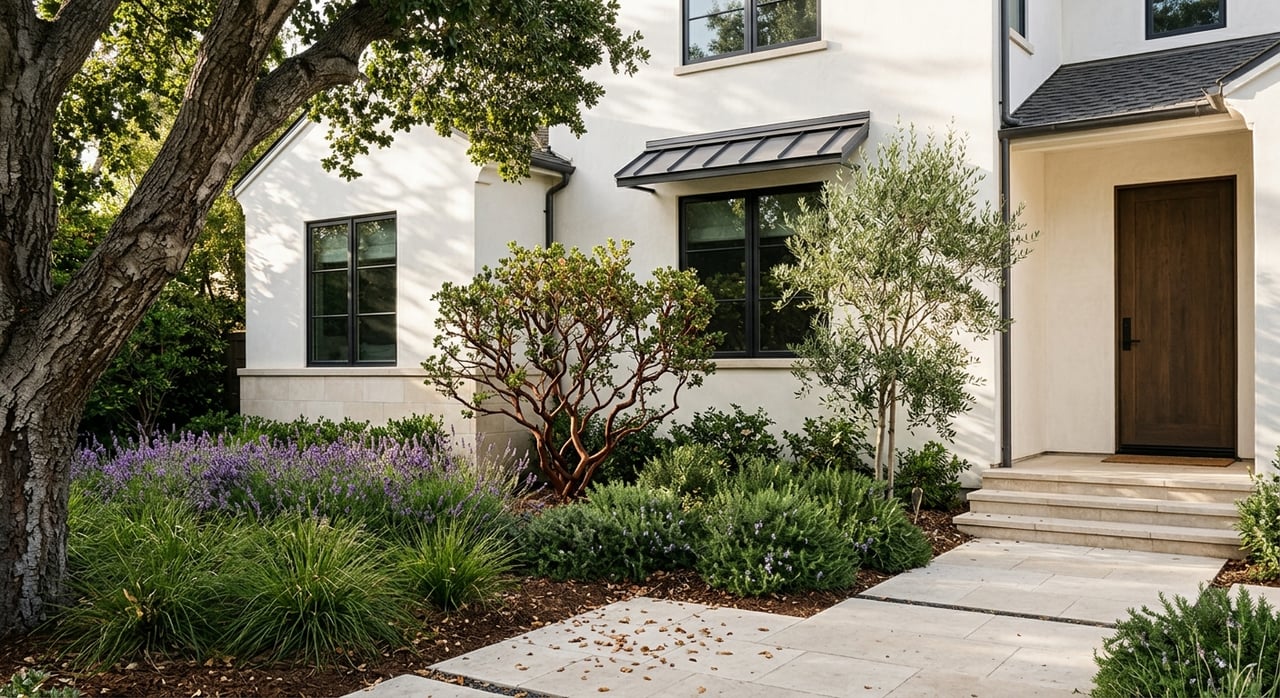
Are you torn between a brand-new home and a resale home in The Promontory? You are not alone. In this El Dorado Hills community, buyers often compare both options side by side because The Promontory includes established villages, active new construction, and a wide mix of home styles. If you want to make a smarter decision based on budget, timing, and lifestyle, this guide will help you weigh the trade-offs. Let’s dive in.
Why this choice matters in The Promontory
The Promontory is not a one-note neighborhood. According to the El Dorado County specific plan, the community was designed as a planned development with eight residential villages, a village center, parks, and open-space areas.
That same plan also shows why home comparisons here can be more nuanced than in a typical resale-only neighborhood. The community includes a broad housing mix, from production-size lots to semi-custom and custom homes on larger hillside lots, with an emphasis on preserving natural topography and existing oak trees.
That matters because you are often not choosing between two different neighborhoods. You are choosing between two different ownership experiences within the same community.
New construction still exists here
If you assumed The Promontory was fully built out, that is not the full picture. The official Promontory Owners Association magazine has advertised Trento at The Promontory as new construction in a private gated community with three floor plans.
That ongoing new-home presence helps explain why buyers in The Promontory are still comparing newer homes with existing resale inventory. The market includes both. The research also notes a February 2026 median sale price of $1.11M and current inventory that included a 2026-built home, reinforcing that this is an active side-by-side comparison for buyers.
Why buyers choose newer homes
Newer construction often appeals to buyers who want a more current starting point. In practical terms, that usually means updated systems, a modern floor plan, and fewer near-term replacement projects.
Energy performance is one of the biggest reasons. California’s 2025 Energy Code is designed to improve efficiency in newly constructed homes, and the EPA says ENERGY STAR certified new homes are at least 15% more efficient than homes built to current code and typically 20% to 30% more efficient than standard new homes.
For you, that can translate into a better baseline for comfort and utility costs. It can also mean less immediate maintenance compared with an older home that may need updates sooner.
Newer home advantages
If you are considering new construction in The Promontory, these are some of the common benefits:
- More modern floor plans and finishes
- Stronger energy-efficiency baseline
- Newer major systems and materials
- Fewer immediate repair or replacement needs
- The ability to compare builder features and included upgrades
That does not mean a newer home is always the better buy. It means the value may come from convenience, efficiency, and lower project load after closing.
What to know about the new-build process
Buying a home that is not yet complete can feel very different from buying a resale home. The Consumer Financial Protection Bureau notes that builders may ask for an upfront deposit if the home is not yet built.
The CFPB also points out that a builder may have an affiliated lender, but you do not have to use that lender. You can shop around for financing and compare your options.
The same guidance recommends financing and inspection contingencies where possible. In many new-construction transactions, negotiation may focus less on large price cuts and more on builder terms, included features, deposit protection, and timelines.
New-build questions to ask
Before you move forward with a newer home, consider asking:
- What deposit is required, and when is it refundable?
- Which features are standard, and which are upgrades?
- What is the expected completion timeline?
- Can you use your own lender?
- What inspections are allowed before closing?
- What are the HOA dues and any parcel-specific taxes?
These questions can help you compare a new home fairly against a resale option that may look simpler on the surface.
Why buyers choose resale homes
Resale homes in The Promontory offer a different kind of value. Instead of buying into a future result, you can evaluate the home, lot, and surroundings as they exist today.
That can be especially helpful in a community shaped by phased development, preserved open space, and lot-specific design. The county’s specific plan describes design controls in some hillside and wooded villages and emphasizes protection of natural features during development.
In real life, that means resale buyers can often better judge how a lot actually lives. You may have a clearer sense of privacy, sunlight, mature landscaping, views, driveway usability, and how neighboring homes relate to the property.
Resale home advantages
For many buyers, a resale home stands out because it offers:
- An established streetscape and more mature landscaping
- The ability to inspect the exact home you will buy
- A clearer view of lot function, privacy, and sunlight
- More insight into condition and previous upkeep
- Negotiation opportunities tied to repairs or updates
If you like certainty, resale can feel more straightforward. You are seeing the actual finished product, not a plan or model.
How resale negotiations differ
Resale negotiations often center on condition. The CFPB recommends making offers contingent on financing and a satisfactory inspection, which is especially relevant when the home already exists and you are evaluating what may need repair or updating.
That creates a different negotiation rhythm. Instead of focusing mostly on included upgrades or build terms, resale discussions often involve inspection findings, repair requests, credits, and the remaining life of systems or finishes.
For some buyers, that is a plus. It creates room to negotiate based on real-world condition rather than estimated future value.
Compare the full monthly cost
One of the biggest mistakes buyers make is comparing homes by asking price alone. In The Promontory, your monthly cost may also include HOA dues and parcel-specific special taxes.
The official Promontory View winter 2024 magazine reported monthly homeowner assessments of $107.50 for most villages and $200.00 for Village 3, Bella Tierra. Buyers should verify the current amount for the specific parcel they are considering because village and phase can matter.
El Dorado County also maintains a Promontory CFD page, and the county’s 2025 senior Mello-Roos report confirms that Promontory CFD 2001-1 remains an active special-tax district.
Cost comparison checklist
When you compare a newer home to a resale home, look at:
- Purchase price
- Interest rate and loan terms
- HOA dues for that village or phase
- Mello-Roos or CFD special taxes
- Expected repair or replacement costs
- Energy efficiency and likely utility costs
- Upgrade or renovation budget after closing
This fuller comparison often changes the answer. A home with a higher purchase price may still be competitive if it reduces near-term expenses. On the other hand, a resale home may offer better value if the lot, setting, and condition justify the difference.
Check design rules before you buy
Whether you buy new or resale, community rules matter. The county specific plan states that some villages include a Custom Lot Design Notebook before lot sales, and an Architectural Control Committee reviews homeowner plans before permits are pulled.
That is important if you are thinking ahead about exterior changes, landscaping, hardscaping, or lot improvements. In some areas of The Promontory, you may need to do more homework before making changes than you would in a neighborhood without similar controls.
For resale buyers, that means not assuming previous improvements tell the whole story about what is allowed in the future. For newer-home buyers, it means understanding what flexibility you may or may not have after move-in.
Which option fits your goals?
In The Promontory, the right answer usually comes down to budget, timing, and project tolerance. Because this is a master-planned community with both active new construction and established resale inventory, the decision is less about location and more about how you want to live and what kind of process fits you best.
A newer home may be the better fit if you want a more modern layout, a stronger efficiency baseline, fewer immediate repairs, and you are comfortable with a builder-driven process or build timeline. A resale home may be the better fit if you value an established setting, mature lot conditions, and the ability to inspect and negotiate on the exact home.
The best strategy is to compare both through the same lens. Look at total monthly cost, lot function, condition, timeline, and how much work you want to take on after closing.
If you are trying to decide between a newer home and a resale home in The Promontory, working with a local advisor can make that comparison much easier. Tiegen Boberg offers direct, hands-on guidance to help you evaluate the real differences between homes, villages, costs, and contract terms so you can move forward with clarity.
FAQs
Should you buy a newer or resale home in The Promontory?
- The better choice depends on your priorities. Newer homes usually offer a more modern layout, stronger energy-efficiency baseline, and fewer immediate repairs, while resale homes often offer a more established setting and a clearer view of the exact lot and home condition.
Are there still new homes for sale in The Promontory?
- Yes. Research provided for this article shows that The Promontory still has active new-construction presence, including Trento at The Promontory, so buyers may compare new and resale homes within the same community.
Do Promontory homes have HOA dues?
- Yes. The Promontory has homeowner assessments, and the winter 2024 association magazine reported monthly dues of $107.50 for most villages and $200.00 for Village 3, Bella Tierra. You should verify the current amount for the specific parcel you are considering.
Do Promontory homes have Mello-Roos or CFD taxes?
- The county confirms that Promontory CFD 2001-1 remains an active special-tax district, so some monthly carrying costs may include parcel-specific special taxes in addition to HOA dues.
What should you compare besides price in The Promontory?
- You should compare the full monthly payment, including HOA dues and special taxes, plus likely utility costs, expected repairs, lot function, inspection findings, and any upgrade budget needed after closing.