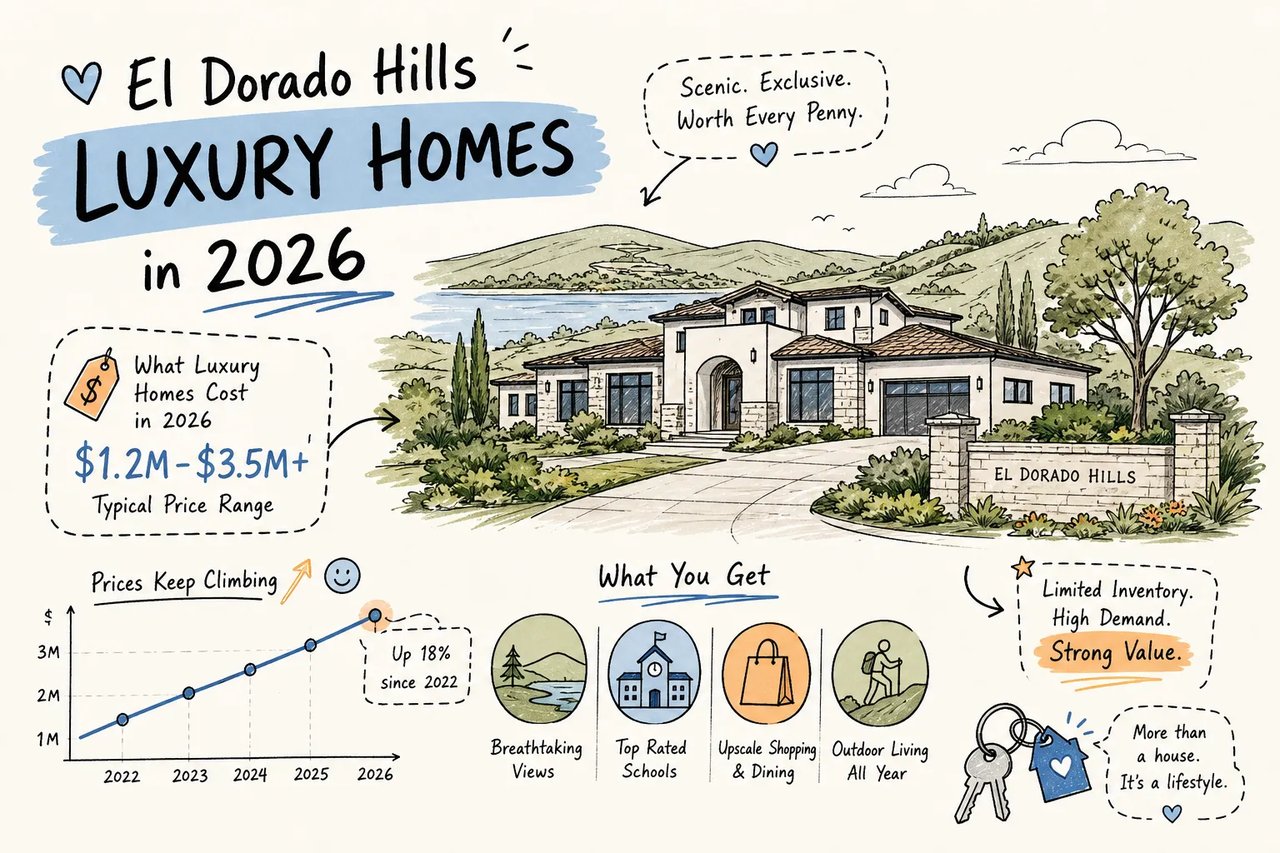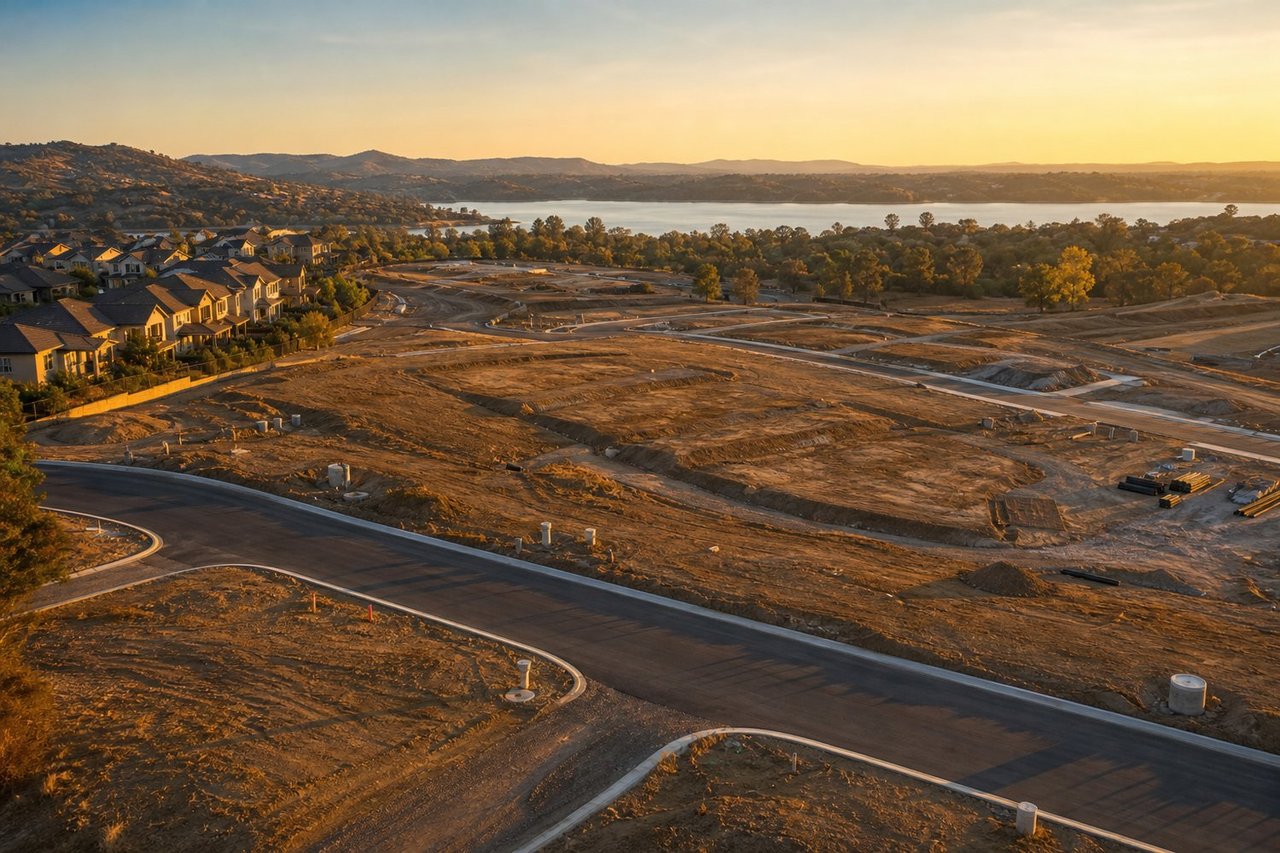
If you are drawn to wide skies and evening light, Kalithea may feel like it was built for you. This gated enclave inside The Promontory is known for custom homes, oak‑lined streets, and long views over the Folsom Lake and American River valley. Choosing the right home here comes down to three things: how the house captures the view, how the lot and slope fit your lifestyle, and how sun exposure shapes daily comfort. In this guide, you will learn what styles dominate, how lots and orientation work, and what to check before you buy. Let’s dive in.
Kalithea at a glance
Kalithea sits on the west edge of El Dorado Hills, upland of the lake and river valley. It is a private, custom‑home pocket inside The Promontory with a strong emphasis on views and natural oak canopy. Local overviews consistently describe the area as hilly and view‑oriented, which is why so many properties are designed to frame sunsets and valley panoramas.
You have quick access to El Dorado Hills Town Center, recreational time at Folsom Lake, and commuter routes toward Folsom and Sacramento. Homes in this area are served by public schools in the Rescue Union School District and feeder paths to Oak Ridge High; for a neutral overview of area schools and access, see the El Dorado Hills Chamber’s school guide.
At the market level, Kalithea sits toward the higher end within The Promontory. Custom estates and larger lots are common, and view properties often command premium prices. That premium is tied directly to the quality and protection of the view, outdoor living design, and the degree of slope and site work involved.
Home styles you will see
Architecture and materials
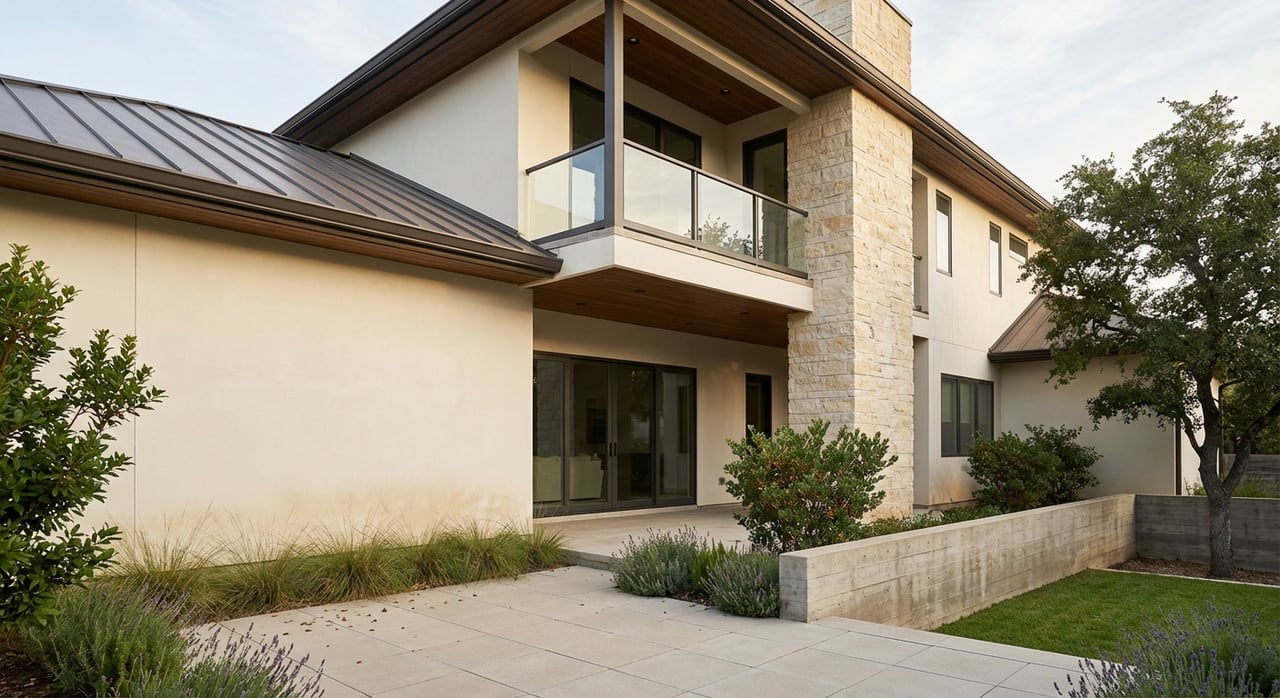
Styles in and around The Promontory lean “New Traditional” with frequent Spanish or Mediterranean influences. In Kalithea, you will also see transitional and contemporary custom designs that blend clean lines with warm materials. Stucco exteriors with partial stone accents are common, paired with tile or composition roofs and generous eaves for shade and visual depth.
Inside, the finishes often support a relaxed, upscale lifestyle. Think open great rooms, statement lighting, and natural materials that keep attention on the view. The best homes keep the interior quiet and refined so the landscape does the talking.
Floor plans that frame the view
Designers in Kalithea take the view seriously. Large windows, broad sliders, and glass walls pull the outside in and orient daily life toward the valley or lake. On sloped parcels, you will often find multi‑level or split‑level floor plans. Main living areas and the primary suite usually sit on the view side, while garages, utility spaces, and secondary bedrooms tuck into uphill portions of the site.
Outdoor rooms are a major theme. Covered patios and loggias extend the great room. When done well, sunset and skyline become your evening backdrop, and hosting flows naturally from kitchen to patio without losing the view.
Energy features and solar readiness
Many high‑end homes in the area highlight built or owned solar systems. If solar is a priority, pay attention to roof orientation and slope. In general, south‑facing roof planes provide stronger year‑round production. If a home has limited southern roof exposure due to design or tree canopy, ground‑mounted systems or alternate orientations can bridge the gap.
Lots, topography and orientation
Lot sizes and privacy
Kalithea parcels are intentionally generous. Many lots range from roughly half an acre to around an acre or more, especially along the ridgelines. That extra space helps preserve view corridors, minimize sightlines between homes, and create room for outdoor amenities like pools and terraces. If long, quiet views are your priority, lot size and placement on the hill matter as much as square footage inside the house.
Hillside realities and build implications
This is foothill country. Expect rolling terrain, oak groves, rock outcrops, and a mix of downslope and terraced parcels. The hillside setting adds beauty and privacy, but it also shapes construction and maintenance. On steeper sites, you are likely to see stepped foundations, retaining walls, engineered drainage, and carefully planned grading.
Before you assume a lot or home site is “build‑ready,” confirm the site engineering. El Dorado County requires engineered grading plans for significant site work, along with erosion control and, in some cases, special inspections. These steps add cost and time, but they protect the home and surrounding hillside. Review the county’s grading permit standards to understand typical requirements and triggers.
Sun, shade and sunset tradeoffs
Orientation drives both comfort and daily routine. West and southwest exposures deliver the biggest sunsets over the lake and valley. They also collect stronger late‑afternoon sun in the summer, which can warm decks and interior spaces. Smart shading is your friend here. Deeper eaves, adjustable screens, and landscape trees placed away from structures can help control heat while preserving the view.
If your priority is solar performance or passive warmth, a design with meaningful south‑facing roof area will be helpful. Walk around the property at different times of day to check sun angles, tree shade, and neighboring rooflines that could cast shadows.
Outdoor living, pools and landscape
Outdoor living is central to the Kalithea experience. You will see covered patios and outdoor kitchens that make evening gatherings easy. Many homes place pools and spas to face the view, often with edge or infinity designs that visually blend water and skyline. Multi‑tier terraces are common on sloped lots, creating separate zones for dining, lounging, and play without losing the panorama.
Landscaping tends to honor the native oak canopy. Drought‑tolerant plants and mixed native palettes are common choices to reduce water use and keep the look natural. If you plan to add or update outdoor spaces, factor in wildfire safety from the start. Portions of the greater El Dorado Hills area are mapped in Moderate to Very High Fire Hazard Severity Zones, depending on exact address. The county enforces defensible‑space rules and may apply building code measures in Very High zones. Review the county’s wildfire maps and updates, and confirm the FHSZ designation for the specific parcel you are considering.
Buyer checklist for Kalithea
Use this quick list to focus your search and due diligence.
- Confirm the view corridor. Ask whether the view is protected by CC&Rs, envelopes, or recorded easements. Review the plat and seller disclosures and ask about future build potential on adjacent parcels.
- Request site documents. A current topographic survey, geotechnical report, and any permitted grading plan or grading‑permit history can clarify expected costs for pads, retaining walls, and drainage work. County rules require engineered grading plans on many sloped sites, so plan accordingly. See the county grading standards for context.
- Verify utilities. Confirm whether water meter, sewer, power, gas, and communications are stubbed to the lot or will require extensions. Utility work can affect budgets and timelines.
- Review HOA and CC&Rs. Kalithea is a gated subdivision within The Promontory. Obtain the HOA packet early to understand design guidelines, landscape rules, private‑road access, and monthly dues.
- Check tax and assessment status. Mello‑Roos or Community Facilities District assessments can vary by parcel. Confirm via the county tax bill and your title report during due diligence.
- Confirm wildfire risk and insurance. Use the county or CAL FIRE lookup to verify the Fire Hazard Severity Zone for the specific address and discuss defensible‑space and building requirements with the local fire district. The county’s wildfire resource page is a good starting point.
- Align orientation with your goals. If you love sunsets, focus on lots with west or southwest exposure and plan shading. If you prioritize PV, look for meaningful south‑facing roof area and minimal long‑term shade. For general solar guidance, review orientation best practices.
- Budget for hillside work. Expect extra costs for stepped foundations, walls, drainage, and erosion control on steeper parcels. These investments pay off in long‑term stability and comfort.
How to compare two Kalithea homes
When two homes look similar on paper, use these lenses to decide which one fits best.
- View quality and privacy. Stand in the great room and on the primary suite terrace. Compare the width of the view, the number of visible rooftops, and any power lines or street activity in the sightline.
- Outdoor flow. Trace your path from kitchen to grill to pool. The best designs minimize steps and doors while keeping the view centered.
- Afternoon comfort. Visit near sunset. Feel the temperature on the deck, note glare at the dining table, and check shade coverage over seating.
- Noise and access. Listen for road noise and test your drive to Town Center at different times of day.
- Future projects. Identify the cost and complexity of your top three improvements. On hillside lots, even small additions may require thoughtful engineering.
Final thoughts
Kalithea was shaped by its hills and its outlook. The most satisfying buys here are the ones where the architecture, lot, and orientation all work together. Focus on the integrity of the view, confirm the site’s engineering and wildfire requirements, and choose a design that supports the way you live outside as much as inside.
If you want a clear read on a specific lot, a second set of eyes on solar or grading details, or a plan to elevate your listing for the market, reach out. With hands‑on, boutique service backed by Coldwell Banker’s marketing strength, Tiegen Boberg helps you compare options, avoid surprises, and move with confidence.
FAQs
What makes Kalithea in El Dorado Hills unique for buyers?
- It is a gated, custom‑home enclave inside The Promontory known for oak canopy, hillside terrain, and view‑oriented homes that prioritize lake and valley vistas.
Which home styles are common in Kalithea, El Dorado Hills?
- You will see New Traditional and Mediterranean influences alongside transitional and contemporary custom designs with stucco, stone accents, and tile or composition roofs.
How big are typical lots in Kalithea, El Dorado Hills?
- Many parcels range from roughly half an acre to around an acre or more, especially on ridgelines, which helps protect views and create space for outdoor amenities.
What should I know about building or remodeling on a hillside lot in Kalithea?
- Expect engineered grading, drainage planning, and possible retaining walls. Review El Dorado County’s grading permit guidance to understand requirements and timelines.
How does sun exposure affect daily living and energy use in Kalithea?
- West and southwest exposures deliver dramatic sunsets but stronger afternoon heat; south‑facing roofs generally support better year‑round solar production. See solar orientation best practices.
Are there wildfire rules that affect landscaping in Kalithea, El Dorado Hills?
- Yes. Portions of the area fall within mapped Fire Hazard Severity Zones. The county enforces defensible‑space requirements that shape plant selection and maintenance. Review current wildfire maps and updates for parcel‑specific guidance.